
By Bill Fletcher Jr.
In the aftermath of the “No Kings” demonstrations of March 28th, there has been renewed interest—and concern—that in many cities the participation of people of color generally, and Black people specifically, has been limited. To my knowledge, no one has done any study on this, so we are forced to rely on a combination of anecdotal information and historical analysis and patterns.
What is completely obvious to anyone who looks at our situation is that the victories won by progressive social movements in the ‘1960s’ have been set back over a more than forty-year period of relentless attacks. Focusing on the Black Freedom Movement for a moment, these setbacks have been resisted over time and taking many forms. The Black-led electoral upsurge that began in the late 1970s and lasted through the end of the 1988 Jesse Jackson Presidential campaign is a case in point of that resistance.
That said, the combination of repression (including assassinations of leaders and activists), strategic confusion and disagreements, and the decline in active mass democratic organizations among African Americans, contributed to a growing malaise, tending towards despair. Not altogether different from the twenty-year aftermath of the defeat of Reconstruction, there started to be a noticeable though not overwhelming turn inward, with parallels in the direction of the politics and philosophy of Booker T. Washington.
In our era, the 1995 Million Man March was an example of this turn inward in the aftermath of defeat. The march had two significant downsides. First, it was all-men. To paraphrase the late Amiri Baraka, one does not go to war and leave half the army at home. Second, there were no demands on the state or corporate America. The march was very much focused inwardly on Black America and, specifically, on Black men. Though mass activism certainly did not disappear in the 1990s, the fact that more than a million people would converge on Washington, DC and not place demands on the state given what was happening—and continued to happen—to Black America was phenomenal.
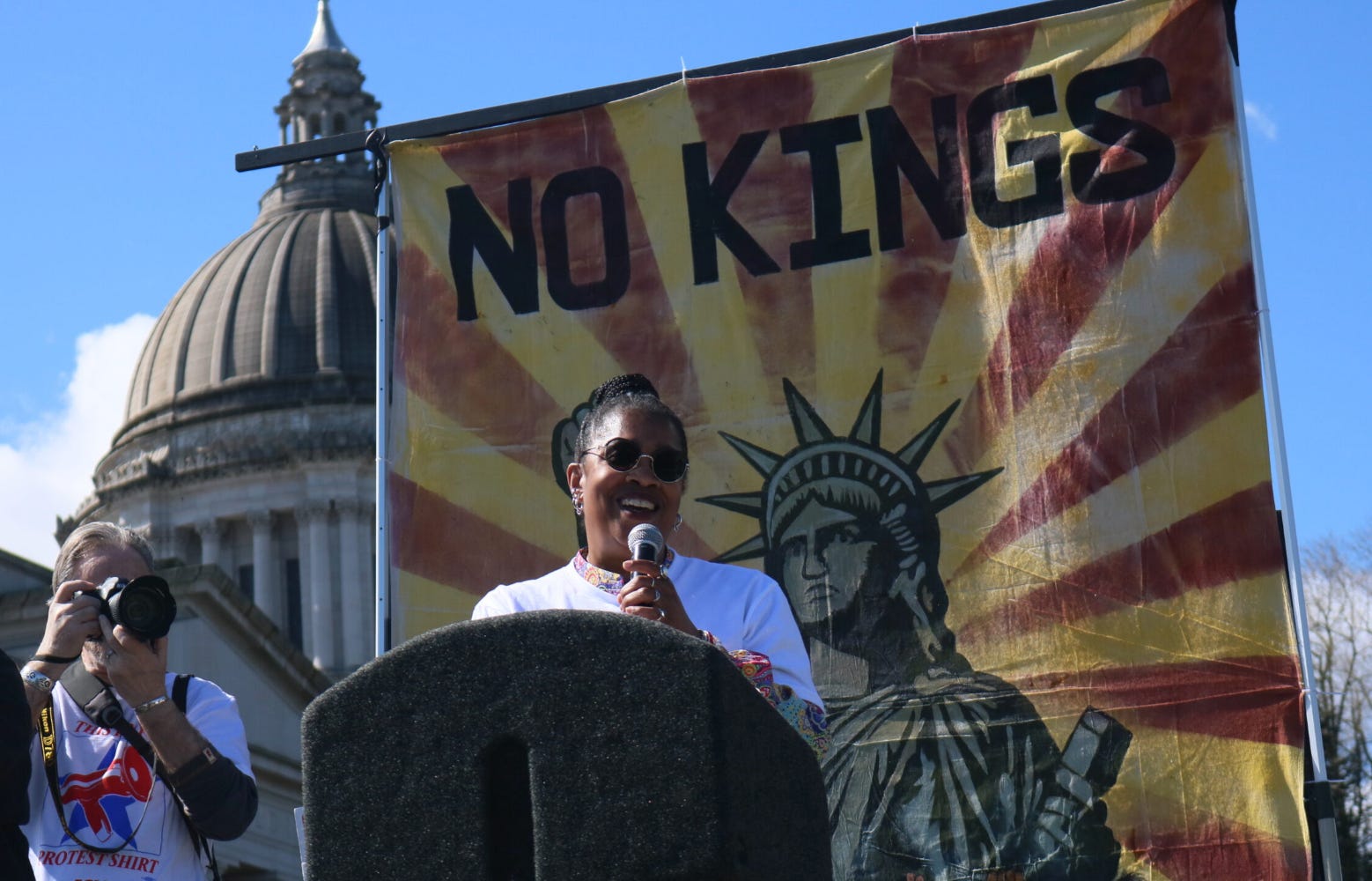
Over time and with the exception of the trade union movement, non-profit advocacy rose to largely replace mass organizing and the building of member-controlled mass democratic organizations. While those engaged in the advocacy work are overwhelmingly dedicated and very much committed to justice and democracy, the large-scale turn away from building personal connections with the grassroots along with challenges associated with the growth of social media, the increased environment of isolation has had a noticeable impact on the willingness of many people to engage in struggle, at least over the longer term.
2020, and the rebellions and protests that followed the murder of George Floyd may appear to be an exception to this but one must be careful with such a conclusion. The 2020 revolt was both amazing and historic. Black-led but multi-racial, it appeared to shake the foundations of the country. In fact, the protests resulted, almost immediately, in shifts in policy by government and corporations alike. I would further argue that it contributed to the defeat of Donald Trump in the 2020 elections.
Nevertheless, that movement failed to build and sustain a progressive institutional presence. While many organizations received significant financial grants to do their work, few of them turned in the direction of mass organizing and the building of mass democratic organizations. There was also little attention paid to the inevitable counterattack that we should have all been expecting from the far Right.
When that counterattack occurred, specifically in the context of the attacks on alleged Critical Race Theory, along with the hysteria built by the far Right in connection with Latin@ immigration, the progressive movements of color were caught flat-footed. Of course, there was resistance but the momentum arising from 2020 was lost during the remaining Covid years and the period of the Biden administration. The far Right was able to shift the narrative and, along with frustration and anger in connection with Biden’s support for the Israeli genocidal war against the Palestinians in Gaza, cynicism, nihilism and paralysis grew.
Thus, today we have found ourselves attempting to come to grips with a level of despair and demobilization that is the result of a combination of the pounding that Black America in particular has received, as well as the absence of a counterstrategy that will take us to a post-Trump/post-neo-liberal USA. Arguments about African Americans being fearful of demonstrating are ludicrous, though there are some African Americans who have promoted such a fear, encouraging us to sit home lest we somehow provoke Trump to bring about martial law.
Those who say that the demonstrations fail to address the demands of Black people have only an element of truth in that, yes, the demands need to expand. That said, Black folks have marched many times under banners that have not specifically addressed us. Ask any number of Black trade union members who have gone on strike over wages, hours and working conditions (sometimes with demands that ignore outright the issues faced by Black workers).
If anything, I would suggest that there is a challenge for the Black Left and, for that matter, all leftists of color. During the Vietnam War it was not unusual to see antiwar demonstrations that were overwhelmingly white. Though people of color were always active in such demonstrations, things tended to change when leftists of color organized and mobilized their respective constituencies to engage. Probably the most notable example among people of color was the 1970 Chicano Moratorium against the Vietnam War that mobilized tens of thousands of Chicanos in the streets of Los Angeles.
Within Black America, significant work was done by the Black Panther Party, SNCC and others to reach Black America in connection with the war, not to mention the impact of the oration of Dr. Martin Luther King during the final year of his life. The antiwar work among Black Americans also included organizing among enlisted personnel in the military. The Young Lords Party, the Puerto Rican Socialist Party, and other Puerto Rican radicals mobilized Puerto Ricans on the island and the mainland in opposition to the war. There was nothing short of a ‘rainbow’ of opposition to US aggression and the growing Right led by then President Nixon.
Today’s Black Left—indeed, all leftists of color—needs to make it their mission to replicate such an approach but under 21st century conditions. There is nothing wrong with having our own contingents in larger rallies; there is nothing wrong with specific outreach to our constituencies. In fact, that is precisely what we need to do. But we must also connect this to a fight for what many people refer to as a Third Reconstruction, that is a progressive future grounded in demands we articulate right now which reflect the needs and aspirations of the oppressed.
A few weeks ago, I was invited to address a community gathering in Baltimore, Maryland that a friend of mine helped organize. The aim was to speak about ICE and the threat that it held for not only Latin@ immigrants but for all immigrants of color and for non-immigrant populations. Perhaps thirty people in the room. They were Black Baltimore residents, many of whom had little to no historical background on ICE, nativism in the USA, and the threats to democracy that are hiding behind the sophistry of the Trump administration.
They sat there and listened; they asked great questions; and many of them wanted to do something as a result of the meeting. They were not viewing this gathering through a computer screen, doing their email at the same time. They were there in-person and were engrossed. That’s how we begin.
[Guest essay re-published with permission from the author and Z Magazine]
Bill Fletcher, Jr. is a longtime trade unionist, cofounder of the Black Radical Congress, past president of TransAfrica Forum, cofounder of standing4democracy.org, and an author of fiction and nonfiction.
Oakland had diversity!! All kinds of folks! Next time I take jpgs.
"No Kings".....a campaign against a nonexistent threat, managed by corporate America to make sure there is no real challenge to the bi-partisan financial ruling class, by sucking up energy which might be available to a real populist challenge.......
"Diversity" in such an event is almost a laughable third tier non-issue.......