

In June 1983, antiwar protesters sat down in front of the General Electric plant in Burlington, Vermont, to protest the manufacturing of Gatling guns. For good reason, they assumed they’d have the support of the city’s socialist mayor, a man by the name of Bernie Sanders. They didn’t. Sanders took the union’s side and watched as police arrested 88 people. The protesters, he explained, were stopping people from getting to work.
He chose the workers, regardless of how he felt about what they were building. But he didn’t think they should be building guns forever. Later, Sanders said the real solution was a massive federal effort to convert weapons factories to peaceful production. “The average worker here would just as soon be producing refrigerators as guns if the wages were the same,” he said. If only.
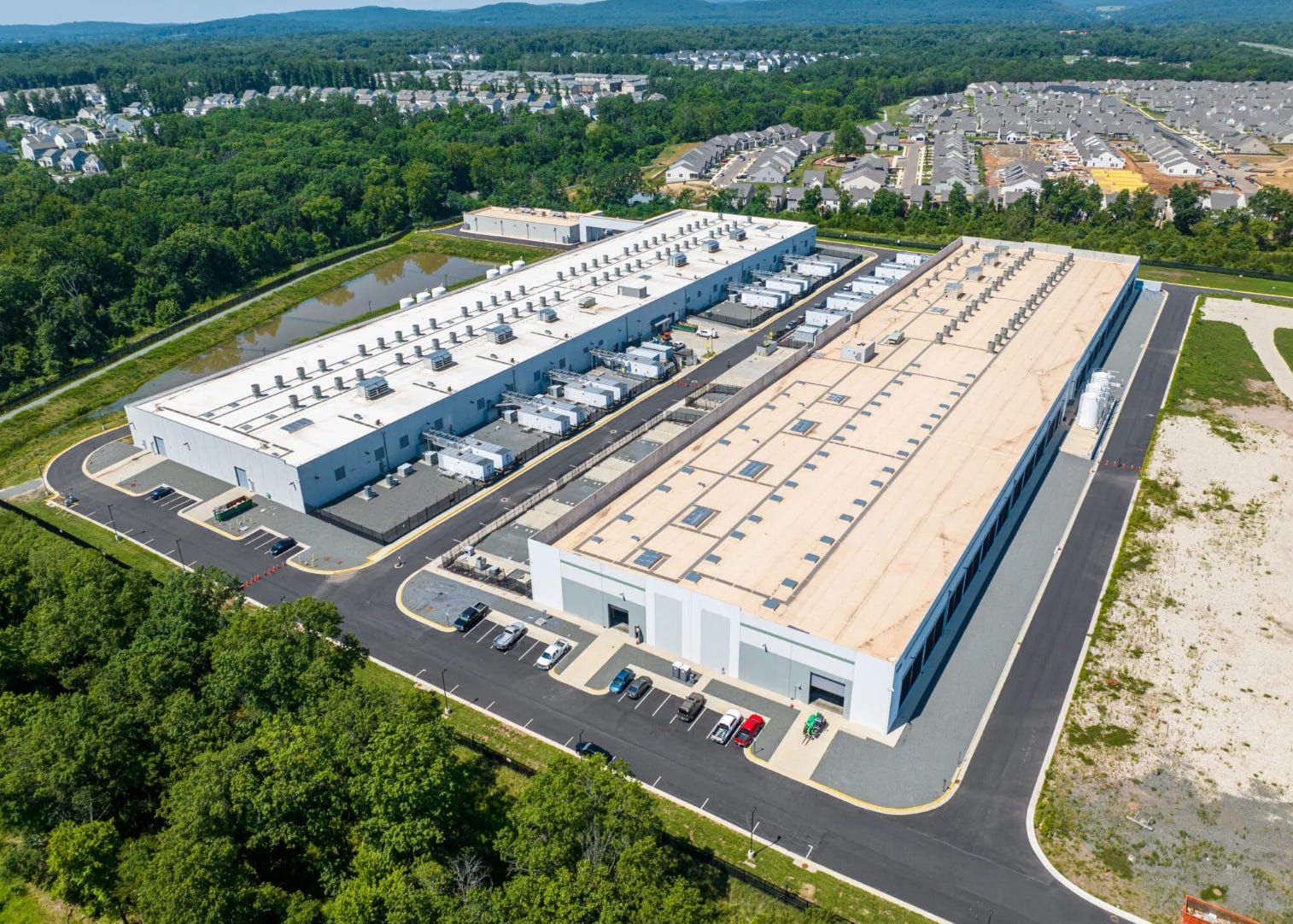
Forty-three years later, Sanders is the Senate sponsor of a federal moratorium on new AI data centers, which he introduced in March (along with AOC, whose House version has 20 Democratic cosponsors). And this time, there are unionized workers on the other side, largely from the building trades.
That doesn’t make Sanders’ position anti-labor: AI is designed to take jobs; he has good reason for wanting to slow it down. There are no federal AI regulations, and even the companies building the technology warn of its danger. Anthropic’s CEO, Dario Amodei, has put the chance that AI goes “really, really badly” at 25%, making him the human embodiment of the “we’re all trying to find the guy who did this” Tim Robinson hot dog meme.
Sanders also has the support of a number of labor leaders. National Nurses United and the American Association of University Professors, for example, have endorsed his moratorium, while the president of the flight attendants’ union has backed a slowdown. In backing the bill, NNU co-president Jamie Brown called the data center boom “a public health crisis, an environmental crisis, and a workers’ rights crisis.” In the AAUP’s endorsement of the moratorium, president Todd Wolfson said the expansion of AI data centers is “not just an environmental crisis—it is a democratic one.” That many labor leaders are opposed to unchecked AI data center development is no surprise: their job is to protect jobs, and employers have cited AI in 121,401 announced job cuts through October, more than double the number for all of 2025.
The Midterm Backlash
After the midterms, there is no denying that the public agrees. On November 3, voters in 10 states opted for limits on data centers in 40 of 41 local ballot measures. Take Ohio as an example. The state accounted for 21 of the 41 initiatives, and data centers dominated its two biggest races. While the national press around the Ohio Senate race may have focused on Trump’s comments about incumbent Jon Husted’s rear, the winner – once and future senator Sherrod Brown – was focused on data centers. He ran a series of ads calling Husted “the face of data centers in Ohio” and accusing him of fast-tracking tax breaks for data centers while Ohioans’ electric bills went up. Democrat Amy Acton, meanwhile, beat Republican Vivek Ramaswamy for governor after proposing a conditional moratorium on data center development. (Also, Ramaswamy ran one of the slimiest attack ads in US history and nearly dropped a child at a rally, but he was already losing at that point.)
Acton has company. Texas, Georgia, Michigan and New Mexico are all getting new governors who ran on some kind of AI data center development pause. In New York and Oregon, where pauses predate the election, the governors say they’ll keep them going. Wisconsin’s governor-elect backed one late in his campaign. In fact, about 40% of the country’s planned data center capacity sits in states whose governors have made that kind of promise.
But none of this means construction has stopped. The New York Times found that plenty of approved projects are moving ahead. Bernstein estimates that just 2% to 4% of future projects could be scrapped. In the words of Austin Keyser, an IBEW official who advised Acton: “We are not going to see a dramatic downturn.”
In short: data centers are still getting built in places that just voted against them, with more limits on the way. Post-midterms, this leaves the people who build them in a precarious spot.
Why the Trades Like Data Centers
AI data centers are often associated with unpopular companies like OpenAI, Anthropic, and Meta, headed by unsavory (no offense) individuals like Sam Altman, Dario Amodei and Mark Zuckerberg, who make comments along the lines of “use AI to generate a podcast of your kids’ interests instead of talking to them” and “yeah, this technology might go really, really badly.” But it’s construction workers who build them and unions that represent those workers.
And thus far, the trades have been open to the data centers. In March, North America’s Building Trades Unions announced a partnership with OpenAI, followed by an April project labor agreement for the $16 billion Stargate campus that OpenAI and Oracle are building in Michigan. Jacob Haas, the business manager of IBEW Local 401 in northern Nevada, told me about 70% of his local’s work is tied to data centers. Shaun Enright, who runs the Northwest Ohio Building and Construction Trades Council, said that if the work slows, “this union will be fighting for work because members are unemployed.” The building trades also work under the assumption that the data centers will go up with or without them. Mark McManus, general president of the plumbers and pipefitters union, told the AP in May that if his union backed a moratorium, “the data centers would still be getting built.” He’s right; it’s hard to refute the idea that tech leaders are allowed to do whatever they want, all the time.
Furthermore, in many areas, there isn’t much else to build. Take out data centers, and private nonresidential construction spending was down 7.9% in June from a year earlier, according to a recent analysis. In July, all of the growth in nonresidential spending came from data centers. The work isn’t spread evenly, though, which means it’s certainly not a foregone conclusion that our construction industry has to run on AI data centers. In the 12 months through May, just five states (Virginia, Texas, Louisiana, Illinois and North Carolina) took in nearly 60% of new data center construction spending. Nationwide, however, data centers are still only about 12% of private nonresidential construction spending. And some leaders do focus on the importance of bolstering other development work. Rep. Ro Khanna (D-CA), for example, has pitched a New Deal-style program that includes an industrial investment bank and 1,000 new trade schools. He told NPR that building affordable housing or an industrial plant “so someone in the building trades can get a good job,” is very different from building data centers.
But that’s a campaign pitch – he’s a likely 2028 candidate. So far, there’s no big federal program to keep the trades employed. We can all revel in the midterm results and Democrats’ massive majorities, but with Trump in the White House, a new round of federally funded construction is unlikely, at least not soon enough for construction workers who have bills to pay now. It’s not enough to say we can save the building trades and stop all AI data center construction: we need an interim solution.
The Union Labor Compromise
During the campaign, a potential compromise emerged: build the data centers, but only if developers meet a list of requirements, union labor among them. Acton’s plan barred new data centers in Ohio unless they covered their own energy costs, met transparency and environmental standards, and were built with 100% union labor. In Texas, Governor-elect Gina Hinojosa has promised a moratorium on new approvals until the Legislature passes protections, and she has named a union-worker requirement among her priorities for lawmakers. Wisconsin Governor-elect David Crowley campaigned on a union-labor requirement too.
For the tech industry, a union requirement probably isn’t a deal-breaker. Along with OpenAI, Meta has signed its own partnership with North America’s Building Trades Unions, an alliance of 14 national construction unions. Google has said most of the labor building its data centers is already union, though that hasn’t been independently confirmed. In Delaware, the developer behind the data center near Delaware City agreed to use union labor just before the county took up regulating it.
That doesn’t mean union-only labor is the norm (it’s not). It just means that for the AI companies – facing the bruising midterm defeat – it’s a price they may be willing to pay. Wes McEnany, a longtime union organizer who now does labor outreach for the Future of Life Institute, told me a 100% union mandate would “absolutely not” deter the AI companies. Developers are “basically willing to give you whatever you want if you greenlight the project,” he said, and union labor is “one more thing that they can say that they’re doing right.” From their perspective, it could be seen as a worthwhile PR move. But a PR move that comes with real jobs.
What Voters Actually Want
But the larger problem is that a union labor requirement doesn’t address why midterm voters were so opposed to the data centers. In NBC’s national exit poll, 76% of voters said they’d oppose a new data center in their community. In poll after poll, voters give the same reasons. In a September University of Chicago/AP-NORC survey, 63% of Americans were concerned about electricity prices, 57% about water and 53% about power outages. A Reuters/Ipsos poll in June had 77% worried that AI data centers would raise electricity costs. In a New York Times poll in September, nearly one in five opponents said they just don’t trust AI. Not one of these polls turned up people who were mad about non-union labor. This isn’t surprising. Support for unions is at 71%, but for voters who aren’t in a union themselves, a promise of union labor is less tangible than their electric bill.
I heard the same from Jason Hoover, who ran for New Castle County Council in Delaware on a data center moratorium. One of the candidates he beat in the Democratic primary was Curtis Linton, the business manager of Laborers Local 199. The president of the Delaware Building Trades – among the loudest supporters of a nearby proposed $8 billion data center – announced Linton’s run and asked members to max out their donations to him. But that wasn’t enough to sway the electorate: Hoover won.
Hoover thinks the Building Trades hurt themselves by treating opposition to data centers as opposition to unions. As he told me: “When someone tells you they’re worried about affording their electric bill, and your response is to suggest they’re anti-union because they oppose a data center, you’re not addressing their concern. You’re giving them a reason to stop trusting you.” He added that a project labor agreement and a 100% union pledge “doesn’t change my position [on the AI data centers]. I’m all for good union jobs, but my primary concern is whether a project is a good deal for Delawareans.” Some of the union heads were more blunt. “I don’t think they care if they are built union or not,” Haas said of AI data center opponents.
So what would it take to change voters’ minds? Mostly ensuring that the cost doesn’t fall on nearby residents. The American Infrastructure Alliance recently found 54% of Americans would support data center construction as long as the companies covered their own electricity, kept everyone else’s bills from going up and didn’t wreck the local environment. Microsoft’s own poll found about 70% of opponents could live with data centers if they came with protections like local tax revenue and limits on water use.
And I spoke with leaders who expressed the same sentiment. If a developer can show that a project “will pay its own way, protect residents from increased costs, and generate meaningful benefits for the community, then let’s have that conversation,” Hoover said. “The problem isn’t the public’s unwillingness to support union jobs. The problem is that these projects are asking the public to bear costs they shouldn’t have to bear.” Francesca Hong, a Wisconsin state representative who ran for governor on a data center moratorium and lost the Democratic primary by less than a point, told me the version she could support is “smaller data center project[s] that aren’t hyperscale AI data centers where developers put [in] the work to build community consent and transparent permitting process.” Matthew Shaw, who compiles a national report on local data center opposition groups, said union and local hiring could help. But without changes on costs, the environment and nondisclosure agreements, “it is piecemeal and won’t get people’s support on its own.”
The Trades’ Leverage
Where does that leave the trades? Essentially, two possible outcomes, at least until there’s federal AI regulation. The first is that real changes – beyond union requirements – to data center development could win voters over. Here, the trades have a real opportunity to use their leverage on the public’s behalf. The AI companies already negotiate with them, and they need projects approved more than anyone. In Enright’s words: “If all the jobsites are shuttered, we’re not working.”
Already, many trades leaders say they are open to increased requirements on the data centers. In Bloomington, Illinois, for example, 78% of voters backed a (nonbinding) hyperscale data center moratorium on November 3. The head of the local IBEW chapter then said he’d support a hyperscale project that followed regulations on water use, energy use and noise. Ronnie Paul, his counterpart at the Laborers’ International Union of North America (LIUNA), said data centers probably need rules on water and power.
The labor leaders I spoke to felt similarly. Haas told me Nevada’s data center tax incentives “need to stay intact but should be shortened in term.” He also backs the regulations Lyon County is drafting: “I believe those are good.” Enright acknowledged that the industry “deserves criticism” for the way it pitches its projects. If the terms are what voters object to, union leaders are willing to renegotiate them in order to keep their members working.
At the same time, the trades also think voters are misinformed. “Data centers are poorly understood by the general public,” Enright told me. “Our experience is that they pay top wages, meet our highest safety standards, they don’t cut corners, and are ready to sign good Project Labor Agreements (PLA) that give entry to new workers into our industry.” Candidates didn’t help. “We got swamped by every candidate attacking these instead of explaining them or calming people down,” he said. His advice for 2028 candidates is to learn the pay scales and safety standards first, then “work to educate the public and be actual leaders.”
He’s not wrong about the misinformation. I’ve written before about how anti-data-center sentiment prioritizes the jobs AI will replace over building trades jobs, and how environmental concerns can be exaggerated by people who just don’t want the data centers. The bigger issue is that the public debate gets flattened. Consider the moratorium bill. Now that Democrats are about to take the House and Senate, the exact language of Sanders and AOC’s bill deserves a closer look. It’s widely praised on the left, but its drawbacks draw little scrutiny. The text covers facilities that run AI “at scale,” a phrase it never defines, or that draw more than 20 megawatts and use high-density server racks or liquid cooling. That leaves smaller facilities in a gray area and blurs the line between AI and non-AI data centers. The conflation between AI data centers and other data centers has been cited as a frustration by nearly every union leader I’ve spoken to. This is particularly relevant for the moratorium bill: AI policy researcher Nat Purser, citing the real estate firm JLL, has pointed out that AI was only about a quarter of data center workloads globally in 2025. The pause also can’t stop companies from building somewhere else. The bill would restrict chip exports to countries without comparable laws, but it doesn’t bar construction overseas. That’s not to say it’s a bad bill – it’s possible to poke holes in anything – but it’s also not fair to suggest a labor leader who opposes it doesn’t care about the risks of AI.
What If the Problem Is AI Itself?
The second possible outcome, though, is that the opposition isn’t really about the data centers at all. It might just be AI. And if that’s the case, nothing about how a data center gets built or paid for can change that. Enright has considered this outcome. “It’s pessimistic to say,” he told me, but “the majority of people don’t want better data centers, they want no data centers.”
Others agreed. McEnany called data centers “a physical manifestation of all of the problems” in people’s lives, whether that’s AI job displacement, kids talking to chatbots, or tech companies making trillions while prices continue to increase. Or, as we’ve all experienced in recent weeks, the general enshittification of modern life, where you can’t be sure your plane will take off or your bank account will let you withdraw money.
It’s not clear how many people hold this position. From my perspective, it appears to be nearly everyone I know and/or follow online, but I (like everyone else) live in a bubble. In Microsoft’s poll, about 15% of opponents said nothing would change their minds, which is close to the nearly one in five in the Times poll who just don’t trust AI. But the true number could be larger: in an ABC News/Washington Post/Ipsos poll from October, 66% of Americans opposed building new data centers anywhere in the country, not just near them, which suggests the opposition goes beyond the data centers themselves. In the same poll, 57% said AI is bad for society.
If that’s what is driving the opposition, the building trades aren’t in a position to change it. The solution is regulating AI itself, which seems unlikely under a president who responded to the string of recent outages with a succinct “It’s fine.”
In that world, the AI data centers may end up concentrated in a smaller number of states. McEnany expects development to get “more surgical” after the midterms: find the places with the least resistance and go there. Development, he imagines, will focus on “the weakest states,” with union members living in hotels for a few months and collecting a per diem. Gordon Johnson of GLJ Research says some Texas projects without power or permits could be scrapped or move across state lines; the research firm TeleGeography predicts that when one area restricts data centers, developers will go next door. Purser has argued that under a moratorium, “facilities will simply continue to be built in friendlier jurisdictions with weaker environmental standards,” whether abroad or in more loosely regulated communities in the US.
Some data center work already runs this way. For example, in Dickens County, Texas, a company plans to house 1,500 people at a camp near a data center site. Meanwhile, RV parks and “man camps” have gone up around Meta’s data center in Louisiana, where about 5,000 workers are expected at the peak of construction. This is not desirable. Enright described that kind of work as “months away from your family because there is work – just many states away.” It would also cost the trades one of their best arguments, which is that the data centers create jobs for local residents.
Where the Trades Go From Here
In 1983, Sanders sided with the GE workers because, as he told it, the protesters were blaming them for decisions made in Washington. The building trades are in a similar spot now. In many areas, the private economy isn’t offering them much work aside from data centers, and three-quarters of voters don’t want them. That’s not the workers’ fault.
I’ve become fascinated by data center moratoria because they challenge one of my existing assumptions: building things is good. At the same time, I support the moratoria – despite their limitations – because of the risks of unfettered AI. The status quo is untenable. Still, we can’t ignore the people building the data centers. In my reporting, I was most moved by something Francesca Hong told me. “It was gutting when I met with bricklayer apprentices at a training center and was asked point blank why I wanted to take jobs away from them.” I’m not sure anyone who supports a moratorium has the answer yet. Enright, for his part, told me opponents might come around “if they trust that the guardrails are real and will be enforced.” Conveniently, that’s something unions can do. After the midterms, the building trades’ best shot at keeping the work might be to fight for that.
